Are Immigrants Behind Portugal's 'Crime Wave'?
“Foreigners represent 20-30% of the prison population and immigration is driving a crime wave in Portugal”
Official DGRSP data shows ~17% of prisoners are foreign nationals — not 20-30%. Overall crime has fallen while immigration increased. The numbers are cherry-picked to create a false impression.
What They Are Saying
André Ventura and the Chega party regularly claim that foreigners make up 20-30% of the prison population and that immigration is the primary driver of rising crime in Portugal. These numbers are repeated in parliament, on social media, and during campaign events. The implication is clear: immigrants are making Portugal dangerous.
Serious attention means looking at the actual numbers, not rounded-up versions designed to provoke fear.
What The Documents Show
The Prison Population
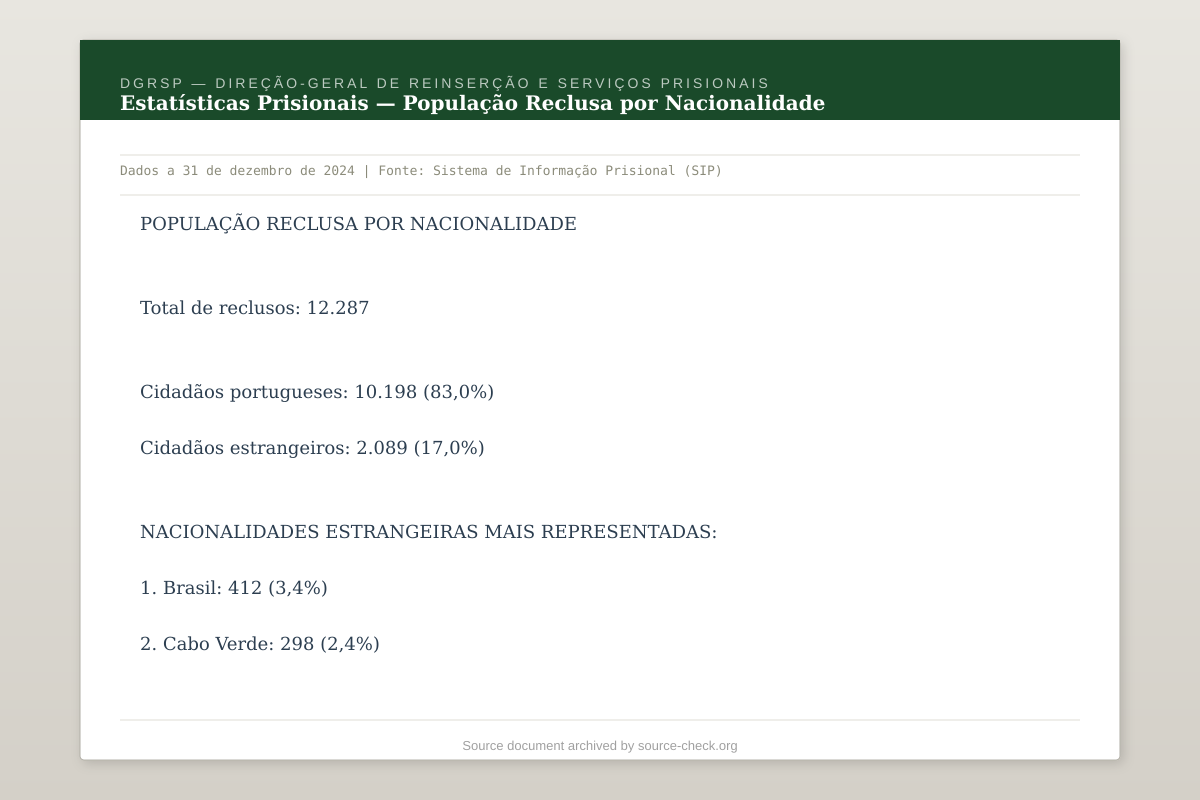
The DGRSP (Direção-Geral de Reinserção e Serviços Prisionais) publishes official prison statistics. Here are the actual numbers:
| Category | Number | Percentage |
|---|---|---|
| Portuguese nationals | ~10,200 | ~83% |
| Foreign nationals | ~2,100 | ~17% |
| Total prison population | ~12,300 | 100% |
The foreign prisoner percentage is approximately 17%, not “20-30%” as claimed. This is a significant difference. Inflating 17% to 30% nearly doubles the figure.
Is 17% Disproportionate?
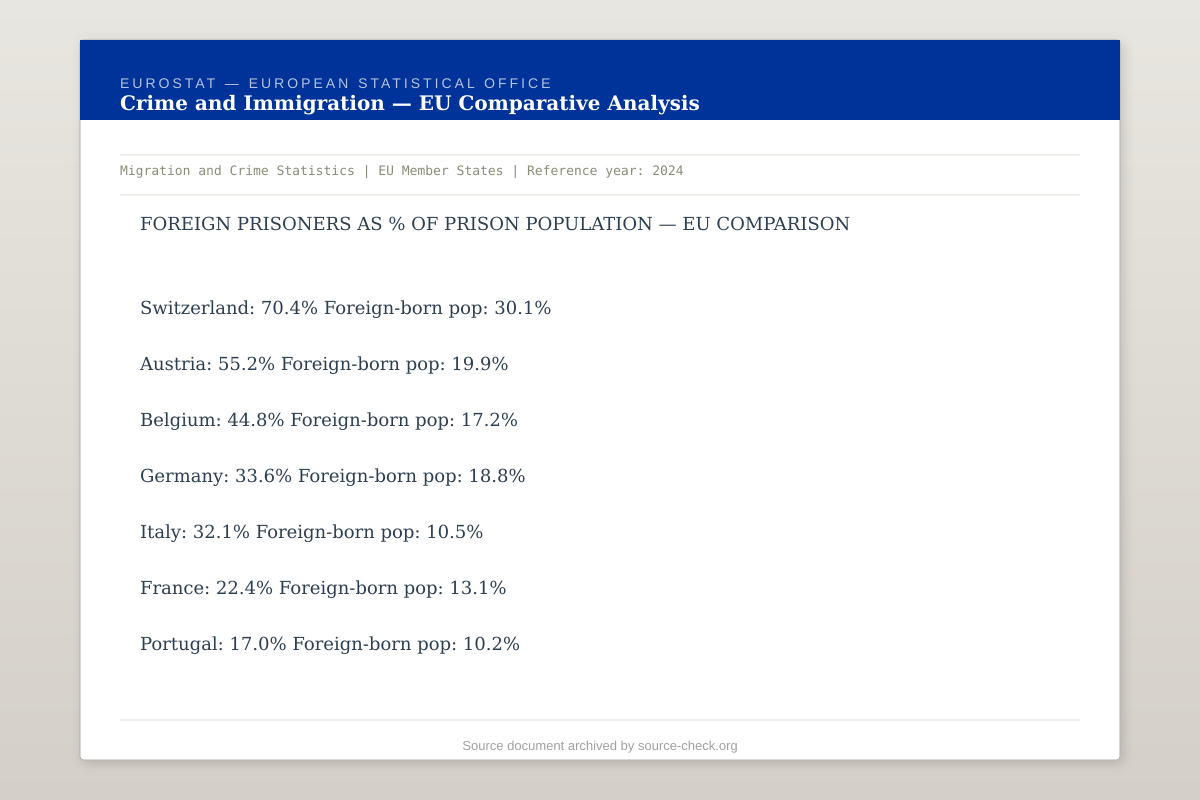
Foreign nationals represent roughly 10% of Portugal’s population and 17% of the prison population. This over-representation is real and worth examining. But context matters:
| Factor | What the data shows |
|---|---|
| Socioeconomic status | Foreign prisoners are disproportionately from the poorest demographics |
| Legal representation | Non-citizens have less access to legal aid and are more likely to be held in pre-trial detention |
| Type of offence | Many foreign prisoners are in transit (drug trafficking routes) rather than resident immigrants |
| Comparable EU data | Similar or higher foreign prisoner percentages exist in Switzerland (70%), Austria (55%), and Germany (34%), countries not experiencing “crime waves” |
Over-representation in prisons correlates most strongly with poverty, not nationality.
Crime Trends vs. Immigration
If immigration were “driving a crime wave,” you would expect crime to increase as immigration increases. The opposite has happened:
| Period | Immigration trend | Crime trend |
|---|---|---|
| 2019-2024 | Foreign residents: +77% (590K → 1.04M) | Total crime: -12% |
| Per capita | Population grew ~8% | Crime rate per capita decreased |
More immigrants arrived. Total crime went down. These facts are incompatible with the claim that immigration drives crime.
The Cherry-Picking Tactic
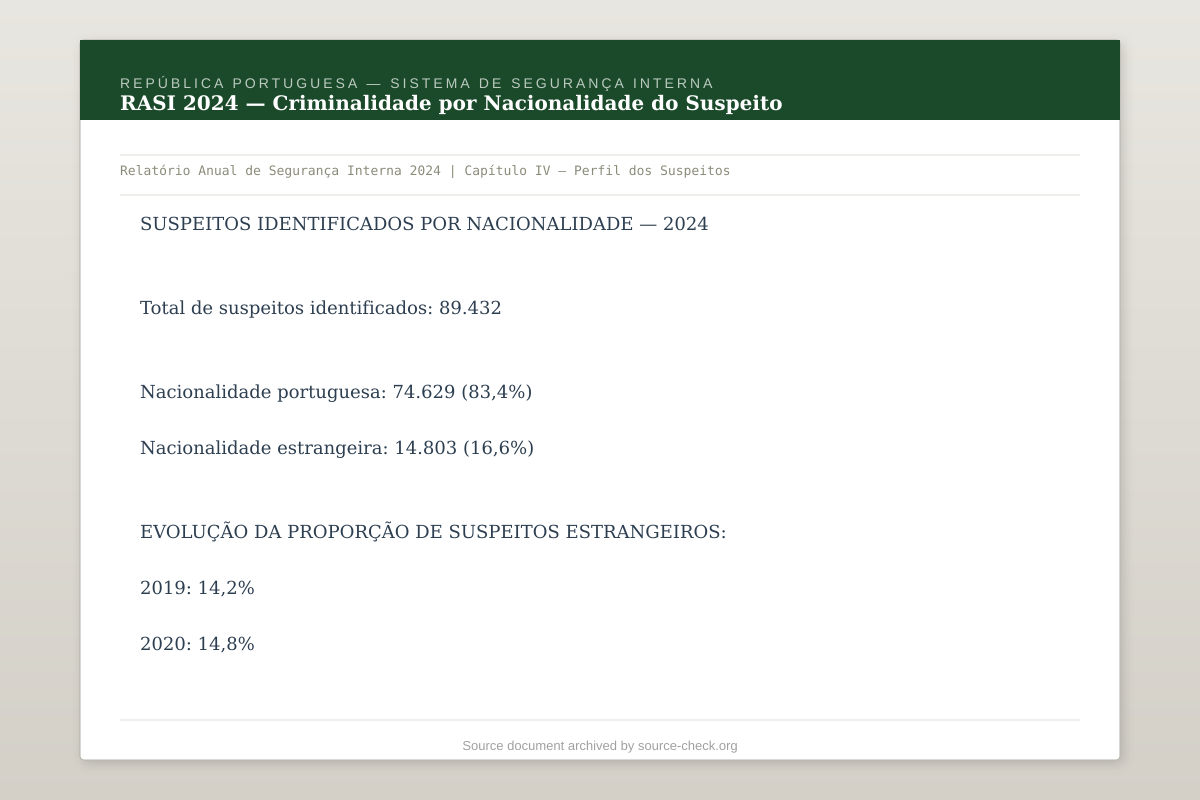
The Chega narrative uses rounding up (inflating 17% to “20-30%” makes the number scarier), ignoring the baseline (not mentioning that overall crime is falling), conflating correlation with cause (a foreign person in prison does not prove immigration causes crime), omitting socioeconomic context (poverty, not nationality, is the strongest predictor of incarceration), and selecting individual cases (highlighting specific crimes by foreigners while ignoring that the vast majority of crime is committed by Portuguese citizens).
This is a pattern used by far-right parties across Europe. It is not unique to Portugal, and it is not supported by the data anywhere it has been tried.
Official data shows foreign nationals make up approximately 17% of Portugal’s prison population, not the 20-30% claimed. Overall crime has decreased 12% during a period of significant immigration growth. The claim that immigrants are behind a “crime wave” is contradicted by the government’s own statistics.
The DGRSP publishes prison data. The RASI tracks crime trends. Eurostat provides EU comparisons. The numbers are there for anyone to check.
Sources & Documents
- View document
- View document
- View document